Wheel alignment is an important part of routine vehicle maintenance because it affects how accurately your car responds to steering inputs, how evenly the tyres wear and how confidently the vehicle tracks along the road. Even when a vehicle appears to drive normally, alignment can change after hitting a pothole, kerb or damaged road surface. Understanding the warning signs can help drivers identify problems before they lead to unnecessary tyre wear or handling concerns.
Wheel alignment is sometimes confused with wheel balancing. They are different services. Balancing addresses weight distribution around a wheel and tyre assembly, while alignment concerns the angles and positioning of the wheels relative to the vehicle and each other. Knowing the difference makes it easier to choose the appropriate service when a driving problem develops.
What Is Wheel Alignment?
Wheel alignment involves checking and, where necessary, adjusting the angles of a vehicle’s wheels so they correspond with the manufacturer’s specifications. Depending on the vehicle, technicians may assess settings such as toe, camber and caster, along with the relationship between the steering system, suspension and road wheels.
The purpose is not simply to make the wheels look straight. Correct alignment helps the vehicle maintain predictable handling and allows the tyres to contact the road as intended. When alignment changes, the driver may notice that the car does not naturally track as expected or that one or more tyres begin to wear unevenly.
Professional steering alignment checks can be particularly useful when steering behaviour changes following suspension work, a collision, a significant impact or repeated contact with potholes and kerbs.
Common Signs You May Need Wheel Alignment
Alignment problems can develop gradually, so drivers may initially notice only subtle changes. Paying attention to the way the vehicle feels can help identify a problem earlier.
Uneven Tyre Wear
One of the most noticeable warning signs is uneven tyre wear. If one edge of a tyre is wearing considerably faster than the other, alignment or another component of the suspension and steering system may require inspection.
However, uneven tyre wear does not automatically prove that alignment is the only cause. Incorrect tyre pressures, worn suspension components and other mechanical issues can also contribute. For that reason, a proper inspection is preferable to simply adjusting the alignment without identifying the underlying issue.
The Vehicle Pulls to One Side
If your vehicle consistently moves towards the left or right when you are trying to drive straight on a suitable, level road, it may be worth having the steering and wheel alignment checked. Tyre pressure differences and road characteristics can also affect directional behaviour, so the symptom should be assessed in context.
The Steering Wheel Is Off-Centre
A steering wheel that remains noticeably off-centre while the vehicle is travelling straight can be another indication that the steering and wheel geometry needs checking. It can also occur after suspension or steering components have been repaired or replaced.
Handling Feels Different
Changes in steering response, cornering behaviour or the vehicle’s tendency to track straight should not be ignored. The UK government advises drivers to ensure their vehicles remain roadworthy and notes that faults involving wheels, tyres, steering and suspension can affect vehicle safety. [GOV.UK vehicle safety guidance](https://www.gov.uk/check-vehicle-safe?utm_source=chatgpt.com)
Wheel Alignment and Tyre Wear
Tyres are designed to operate with a specific contact pattern against the road. When wheel angles move outside the appropriate range, the tread may no longer meet the road evenly. Over time, this can produce irregular wear that reduces the useful life of the tyre.
The UK’s Highway Code advises drivers to check tyre pressures regularly and explains that excessive or uneven tyre wear can be associated with braking or suspension faults or wheels being out of alignment. [GOV.UK Highway Code vehicle maintenance guidance](https://www.gov.uk/guidance/the-highway-code/annex-6-vehicle-maintenance-safety-and-security?utm_source=chatgpt.com)
Regular visual checks therefore form an important part of vehicle maintenance. Look for differences between the inner and outer edges of the tread, unusual wear patterns and changes that appear more pronounced on one wheel than another. If something looks unusual, a professional inspection can determine whether alignment, inflation, suspension or another issue is responsible.
Wheel Alignment vs Wheel Balancing
Wheel alignment and wheel balancing are related but separate maintenance services.
The Wheel alignment focuses on wheel angles and their relationship to the vehicle. It is commonly considered when a car pulls to one side, the steering wheel appears off-centre or tyre wear develops unevenly.
Wheel balancing focuses on distributing weight correctly around the wheel and tyre assembly. Imbalance can contribute to vibration, particularly at certain speeds.
Because the symptoms can sometimes overlap, drivers should avoid assuming that every steering or tyre-related problem requires the same service. A qualified technician can inspect the vehicle and determine whether alignment, balancing, tyre pressure, suspension work or another repair is appropriate.
When Should You Check Wheel Alignment?
There is no single interval that applies equally to every vehicle because driving conditions, vehicle design and manufacturer recommendations vary. Instead, drivers should consider an alignment check when specific circumstances arise.
- After hitting a significant pothole or kerb.
- After an accident or substantial impact involving a wheel.
- When fitting or repairing steering or suspension components.
- When unusual or uneven tyre wear appears.
- When the steering wheel no longer sits correctly while driving straight.
- When the vehicle develops a persistent tendency to pull to one side.
- When handling changes without an obvious explanation.
Wheel and tyre condition are also part of the UK’s MOT inspection framework. GOV.UK guidance states that tyres are inspected for factors including condition, security, size, type and tread depth. [GOV.UK MOT inspection guidance](https://www.gov.uk/guidance/mot-inspection-manual-for-private-passenger-and-light-commercial-vehicles/5-axles-wheels-tyres-and-suspension?utm_source=chatgpt.com)
What Happens During a Wheel Alignment Check?
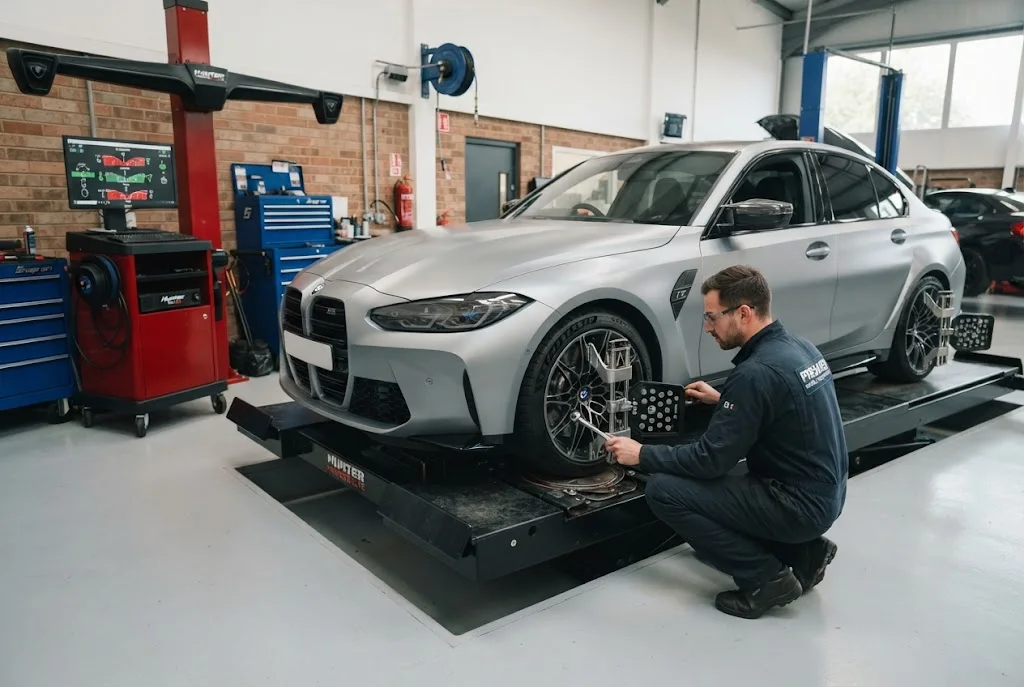
A professional alignment service normally begins with an inspection of the vehicle and its steering, suspension, wheels and tyres. The technician may then use dedicated alignment equipment to measure wheel angles against the vehicle manufacturer’s specifications.
If measurements show that adjustment is required and the relevant components are serviceable, the technician can make the appropriate adjustments. Depending on the vehicle, alignment may involve the front axle, rear axle or both.
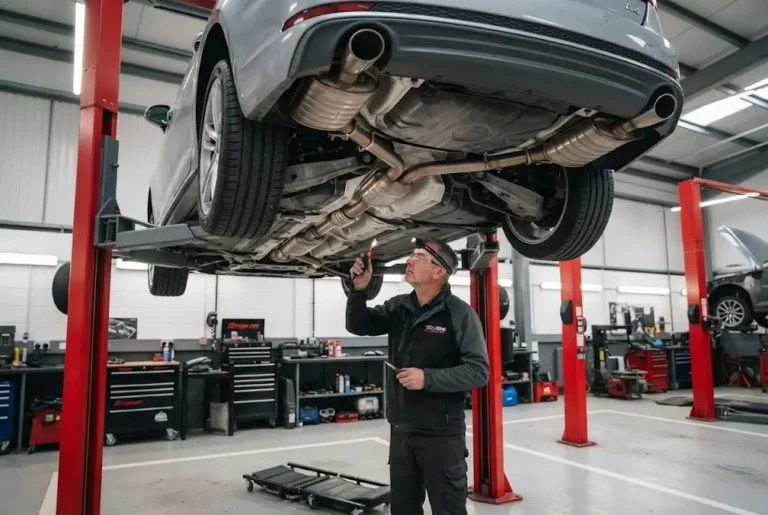
It is important to remember that alignment equipment cannot compensate for every mechanical fault. Worn steering or suspension components may need to be repaired before accurate alignment can be achieved. This is why a thorough inspection is an important part of the process.
How Road Conditions Can Affect Alignment
UK roads can expose vehicles to potholes, uneven surfaces, kerbs and other impacts. A single severe impact can potentially alter wheel geometry or damage a steering, wheel or suspension component. Frequent short trips over poor surfaces can also make it worthwhile to pay closer attention to tyre condition and steering behaviour.
Drivers cannot prevent every road impact, but they can reduce the risk of overlooking its consequences. After a significant impact, check the affected tyre and wheel when it is safe to do so and pay attention to any subsequent changes in handling.
Wheel Alignment as Part of Preventive Maintenance
Good vehicle maintenance is not limited to replacing parts when they fail. Regular checks of tyres, pressures, steering, suspension and wheels can help identify developing problems earlier.
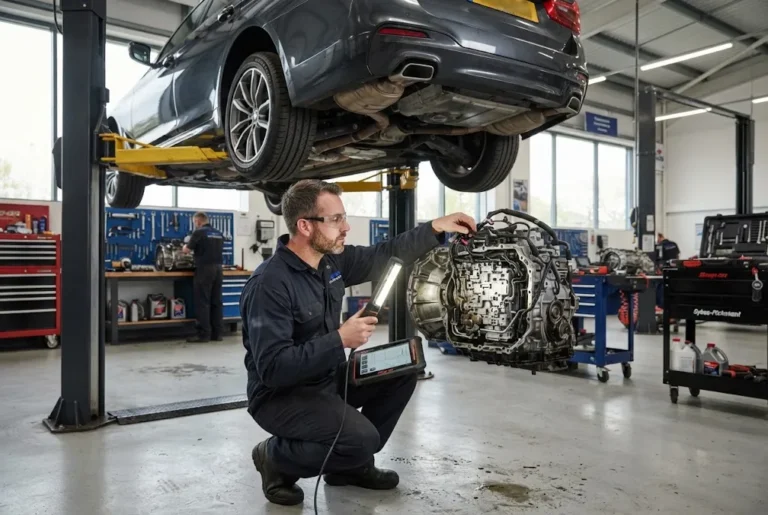
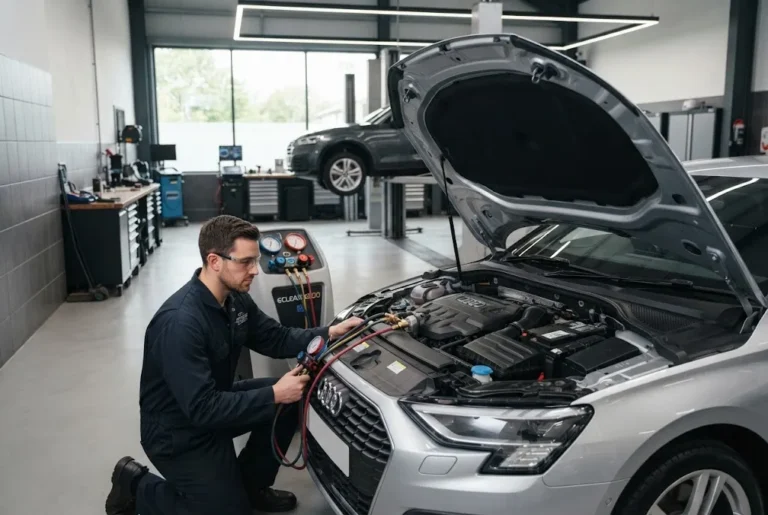
Wheel alignment should therefore be considered alongside other maintenance tasks rather than as an isolated service. For drivers developing a broader maintenance routine, related auto transmission service and auto air conditioning service topics can help explain other areas of vehicle care.
For businesses producing automotive educational resources, these subjects can also form connected automotive content marketing clusters. Clear explanations of common maintenance issues give readers useful information while creating logical opportunities to explore related vehicle-care topics.
Final Thoughts on Wheel Alignment
Wheel alignment plays an important role in steering behaviour, tyre contact and overall vehicle maintenance. Uneven tyre wear, an off-centre steering wheel, persistent pulling or changed handling can all justify a professional inspection, although these symptoms can have several possible causes.
Rather than waiting until a tyre becomes badly worn or the vehicle becomes difficult to control, drivers should pay attention to changes in steering and tyre condition. When alignment is checked alongside the wider steering, suspension, wheel and tyre system, potential problems can be identified more accurately and addressed as part of a sensible maintenance routine.