A mobile auto service gives UK motorists access to vehicle-related assistance without necessarily having to take the car to a traditional garage. Instead, a mobile mechanic can travel to a customer’s home, workplace, driveway or another suitable location to carry out certain inspections, maintenance tasks, diagnostics and repairs.
This approach can be particularly useful when a vehicle is difficult to move, when a driver has a busy schedule or when the required work can safely be completed at the customer’s location. However, mobile servicing is not suitable for every fault or repair. Understanding what mobile mechanics can realistically provide helps drivers choose the right type of assistance.
What Is a Mobile Auto Service?
A mobile auto service is a vehicle maintenance or repair service delivered at a location chosen by the customer rather than exclusively at a fixed workshop. Depending on the provider, the service may involve routine maintenance, diagnostics, inspections, minor repairs or roadside assistance.
The exact capabilities vary between mobile mechanics. Some operate as general vehicle service providers, while others specialise in particular makes, diagnostics or specific types of repair.
Before arranging an appointment, motorists should explain the problem clearly and ask whether the required work can be completed safely at the proposed location. Some repairs require specialist workshop equipment, lifting equipment or facilities that are not practical to transport.
How Mobile Auto Service Works
The process normally starts with the customer describing the vehicle and the reason for requesting assistance. Useful information can include the make and model, registration details where appropriate, symptoms, warning lights, recent repairs and the location of the vehicle.
The mobile mechanic can then determine whether the issue appears suitable for an on-site appointment. Depending on the problem, the technician may inspect the vehicle, perform diagnostic tests, carry out maintenance or complete a repair.
If the issue cannot reasonably be resolved on-site, the mechanic should explain the situation and advise on the next appropriate step. In some circumstances, that may involve arranging recovery to a workshop.
What Can a Mobile Mechanic Do?
Mobile mechanics can provide a range of services, although the available options depend on their equipment, qualifications and working environment.
Mobile Vehicle Diagnostics
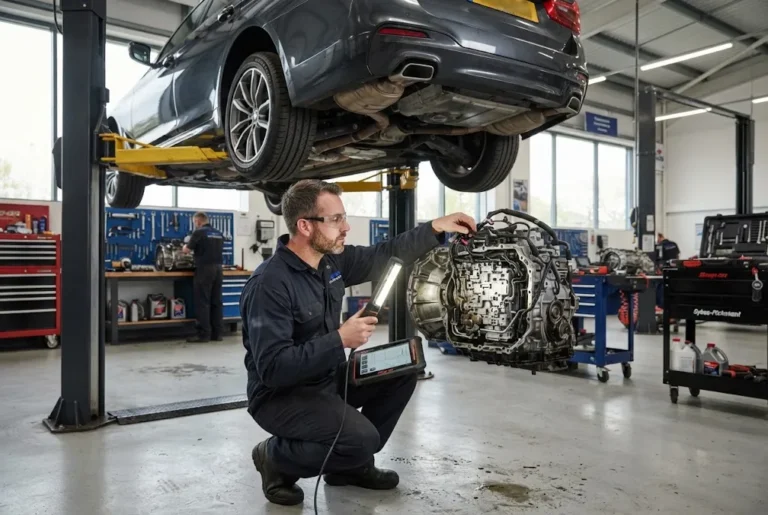
Modern vehicles contain numerous electronic control systems, making diagnostics an important part of automotive service work. A mobile mechanic may use suitable diagnostic equipment to investigate warning lights, fault codes and other symptoms.
Diagnostic equipment can provide useful information, but a fault code alone does not always identify the complete cause of a problem. A professional may need to combine electronic readings with physical inspection and additional testing.
Routine Maintenance
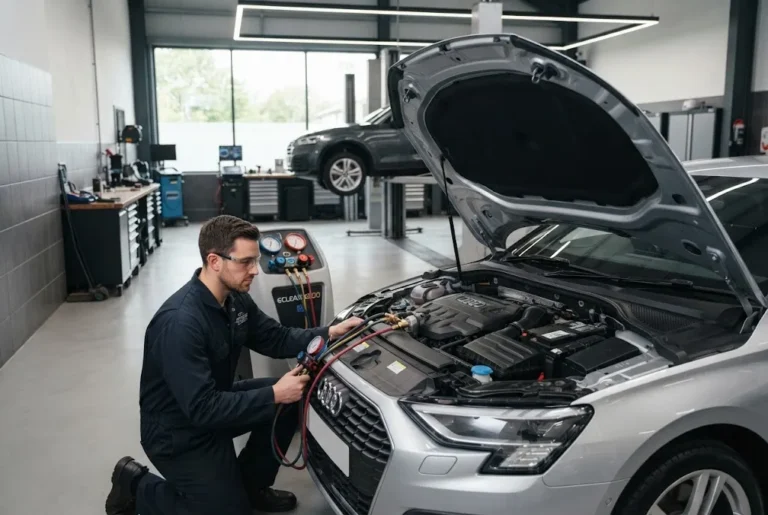
Some mobile mechanics provide routine maintenance at a customer’s home or workplace. Depending on the vehicle and service package, this may include selected servicing and maintenance tasks that can be performed safely without a full workshop.
Drivers should check exactly what is included rather than assuming every mobile provider offers the same service. Manufacturer requirements can also differ between vehicles.
Minor Repairs
Certain repairs may be suitable for mobile servicing when the mechanic has the required parts, tools and working conditions. Examples can include selected electrical repairs, component replacements and other relatively contained jobs.
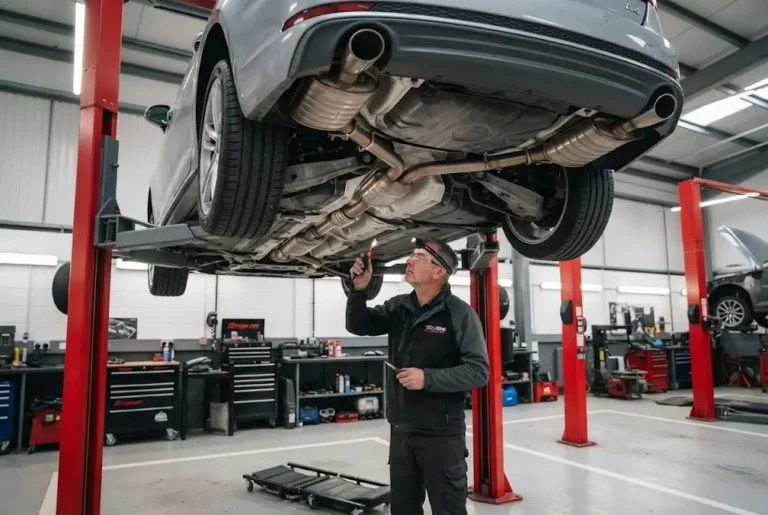
More complicated work may require a fixed workshop. If a repair involves specialist machinery, extensive dismantling or a controlled working environment, moving the vehicle to an appropriate facility may be safer and more practical.
Mobile Auto Service and Roadside Assistance
Mobile servicing and roadside assistance overlap, but they are not necessarily the same thing. Roadside assistance is generally focused on helping a driver when a vehicle becomes unusable or develops a problem while away from home.
A mobile mechanic may be able to attend a breakdown location, investigate the fault and complete a repair if the problem is suitable for on-site work. However, some breakdowns require vehicle recovery because the fault cannot be safely or practically resolved at the roadside.
Drivers should therefore avoid assuming that calling a mobile mechanic guarantees an immediate roadside repair. The nature of the fault, vehicle location, safety conditions and available equipment can all affect what is possible.
When Is Mobile Auto Service Useful?
There are several situations where mobile servicing can offer a practical alternative to visiting a garage.
- The vehicle is parked at home and requires routine maintenance.
- The owner has limited time to travel to and wait at a garage.
- The vehicle has developed a fault but can remain safely parked.
- A diagnostic assessment is needed at the vehicle’s current location.
- The vehicle cannot easily be driven because of a suspected fault.
- A business needs vehicle support at a workplace or fleet location.
- A driver needs assistance following a breakdown and the problem may be repairable on-site.
The key consideration is suitability. Convenience should never take priority over safe working conditions or the need for specialist workshop equipment.
Benefits of Using a Mobile Mechanic
Convenience is one of the main reasons motorists consider mobile mechanics. Instead of arranging transport to a garage or spending time waiting for a vehicle to be serviced, customers may be able to arrange work at a suitable location.
Mobile servicing can also be useful for vehicles that are difficult to move. If a car is experiencing a problem that makes driving inadvisable, having a technician attend the vehicle can provide an initial assessment without requiring the owner to drive it unnecessarily.
For some customers, communication can also feel more direct. A mechanic working at the customer’s location may be able to explain what they are checking and discuss findings as the work progresses.
However, these benefits depend on the provider, service and circumstances. Customers should still check qualifications, service scope, pricing and availability before booking.
Mobile Auto Service vs Traditional Garage
Neither mobile servicing nor a traditional garage is automatically better for every situation. They solve different practical problems.
A mobile mechanic can be particularly convenient for selected maintenance, diagnostics and repairs that can be performed safely at the customer’s location. A fixed workshop, meanwhile, generally has access to a wider range of equipment and facilities for more complex mechanical work.
The best option depends on the vehicle and the work required. If a mobile mechanic determines that workshop facilities are necessary, arranging professional recovery may be more appropriate than attempting to continue driving the vehicle.
How to Prepare for a Mobile Mechanic Appointment
Good preparation can make a mobile appointment more efficient. Before the mechanic arrives, gather any relevant service records and note when the problem first appeared.
Drivers should also record useful symptoms. For example, note whether a warning light appears continuously or intermittently, whether a noise occurs during braking or acceleration, and whether the vehicle behaves differently when the engine is cold or warm.
If the appointment is taking place at home or another private location, ensure the mechanic has enough safe working space. Poor access, uneven ground, restricted parking or unsafe traffic conditions can make certain jobs impractical.
Clear communication before the appointment is particularly important. Providing accurate information helps the provider determine whether the requested work is appropriate for a mobile visit.
Questions to Ask a Mobile Mechanic
Before booking a mobile auto service, customers can ask a few straightforward questions:
- Is the specific problem suitable for mobile repair?
- What equipment will be used for diagnosis or servicing?
- What exactly is included in the quoted service?
- Are parts and labour included in the price?
- Will additional work require approval before it is carried out?
- What happens if the vehicle needs workshop-based repairs?
- Does the provider offer any relevant warranty or guarantee on completed work?
These questions help establish expectations and reduce the risk of misunderstandings about the scope of the appointment.
Mobile Auto Service and Customer Communication
Customer communication is especially important for mobile mechanics because much of the service takes place away from a traditional reception desk. Clear service descriptions and straightforward communication can help customers understand what they are booking.
A professional mobile service page should explain the type of vehicles served, service areas, common problems handled, appointment process and any important limitations. It should also avoid promising repairs that cannot reliably be completed on-site.
This is where strong auto services content can support customer education. Rather than simply listing services, useful content can answer the questions customers are likely to ask before making contact.
Mobile Mechanics and Local SEO
Because mobile mechanics travel to customers, location is naturally important to their online visibility. Customers usually search for services that are available within a practical distance from their home, workplace or breakdown location.
For businesses offering mobile servicing, service-area content should therefore be clear and useful. A dedicated location page can explain where the mechanic operates, which services are available in that area and how customers can request assistance.
However, location pages should provide genuine local information rather than repeating the same text with different town names. Useful local SEO content should help customers understand whether the service is actually available to them.
Writing Effective Mobile Mechanic Service Pages
A mobile mechanic website needs more than a simple list of services. Strong service page writing should reflect the questions a customer has when deciding whether to make contact.
The page should clearly communicate the service, explain suitable use cases and establish what happens after an enquiry. If diagnostics are offered, explain what they can and cannot establish. If roadside assistance is available, explain the circumstances in which on-site repair may be possible.
Clear landing page copy can also make the booking process easier. Calls to action should be straightforward, while important information about service areas, appointment availability and pricing should not be hidden behind vague marketing language.
Mobile Auto Service for Businesses and Fleets
Mobile servicing can also have practical applications for businesses operating multiple vehicles. A mobile mechanic may be able to attend a workplace or fleet location for suitable maintenance and diagnostic tasks, potentially reducing the need to move individual vehicles to a workshop.
Fleet operators should nevertheless assess whether the provider has the capacity, equipment and scheduling flexibility required for their vehicles. Larger or more complex repairs may still need workshop facilities.
Good service documentation can also help businesses maintain clearer records of completed maintenance and identified issues.
Safety Considerations for Mobile Servicing
Safety should remain a priority when vehicle work is performed away from a workshop. Not every location is suitable for mechanical work, particularly near moving traffic, on unstable surfaces or in areas with limited space.
Customers should follow the mechanic’s instructions regarding vehicle access and working conditions. If a vehicle is in a dangerous roadside position, recovery may be more appropriate than attempting a repair where the technician or customer could be exposed to traffic.
Similarly, drivers should not attempt to move a vehicle simply to make a mobile appointment if doing so could worsen a suspected mechanical problem or create a safety risk.
How Mobile Auto Service Fits Into Vehicle Care
Mobile servicing should be viewed as one part of a broader vehicle maintenance approach. Regular maintenance, appropriate servicing, inspections and timely repairs all contribute to informed vehicle ownership.
For example, an inspection may identify a developing issue, while a later diagnostic appointment may establish the cause. A mobile mechanic might then complete a suitable repair, while more extensive work could require a workshop.
Connecting these subjects helps drivers understand that automotive care is a process rather than a collection of isolated services.
Final Thoughts on Mobile Auto Service
Mobile auto service offers UK motorists a convenient way to access selected vehicle maintenance, diagnostics and repair services at a suitable location. It can be particularly useful when travelling to a garage is inconvenient or when a vehicle cannot reasonably be driven before its condition has been assessed.
However, mobile servicing has practical limits. The type of fault, available equipment, location and safety conditions all determine whether work can be completed on-site. Customers should therefore describe the problem accurately, confirm the scope of the service and ask what will happen if workshop facilities are required.
For automotive businesses, clear service pages and useful customer education can make mobile services easier to understand. When service information, local content and related maintenance resources are connected naturally, customers can find the right information while the website develops stronger topical authority around automotive services.