Automotive content marketing helps automotive businesses, publishers and service providers attract relevant audiences by creating useful content around vehicle maintenance, repairs, services and ownership questions. Instead of publishing unrelated articles whenever a keyword appears, an effective strategy connects related topics into organised content clusters that support topical authority, search visibility and a better user experience.
For an automotive website, this can mean building connected resources around subjects such as wheel alignment, exhaust systems, air conditioning, transmissions and other vehicle services. A structured approach also makes it easier to create an editorial workflow where each article has a clear purpose and naturally supports related pages.
What Is Automotive Content Marketing?
Automotive content marketing is the process of creating and publishing useful, search-focused content for people interested in vehicles, maintenance, repairs, services and automotive information. The content can include educational guides, technical explainers, maintenance tutorials, service articles and other resources that answer specific questions.
The goal is not simply to produce a high volume of pages. Each article should satisfy a defined search intent while contributing to the broader subject coverage of the website.
For example, an automotive site could publish a detailed guide to wheel alignment and then develop related content around tyre wear, steering alignment and wheel balancing. The pages address different questions while collectively strengthening the site’s coverage of vehicle maintenance.
Why Content Clusters Matter for Automotive Websites
Content clusters organise related articles around a broader subject. This structure allows a website to move beyond isolated keyword targeting and develop deeper topical coverage.
An automotive website might create separate clusters for transmission maintenance, exhaust systems, climate control and wheel-related services. Within each cluster, articles can answer specific questions while linking naturally to other relevant resources.
This approach can also reduce repetition. Instead of writing several articles that target almost identical search intent, each page can have a clearly defined role within the overall cluster.
How Automotive Content Marketing Builds Topical Authority
Topical authority comes from demonstrating meaningful coverage of a subject rather than repeatedly mentioning the same keyword. An automotive website can build this coverage by addressing the different questions readers have before, during and after a maintenance or repair decision.
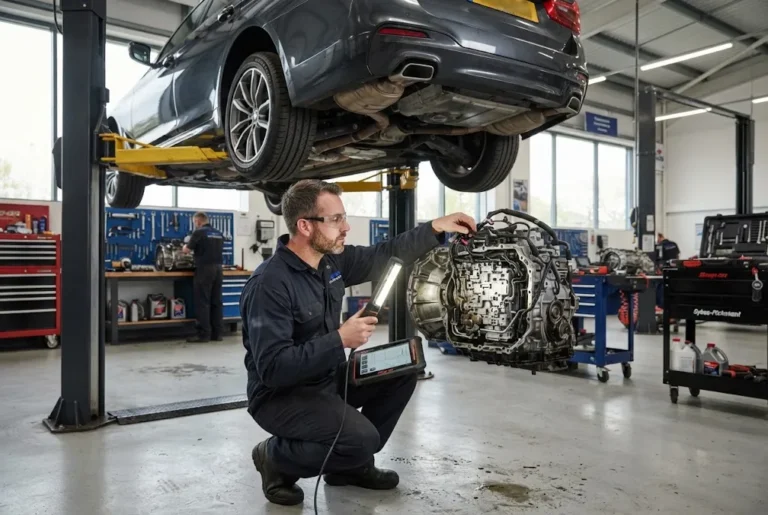
For example, a transmission cluster could include information about auto transmission service, transmission fluid, gearbox maintenance, automatic gearboxes and common transmission symptoms.
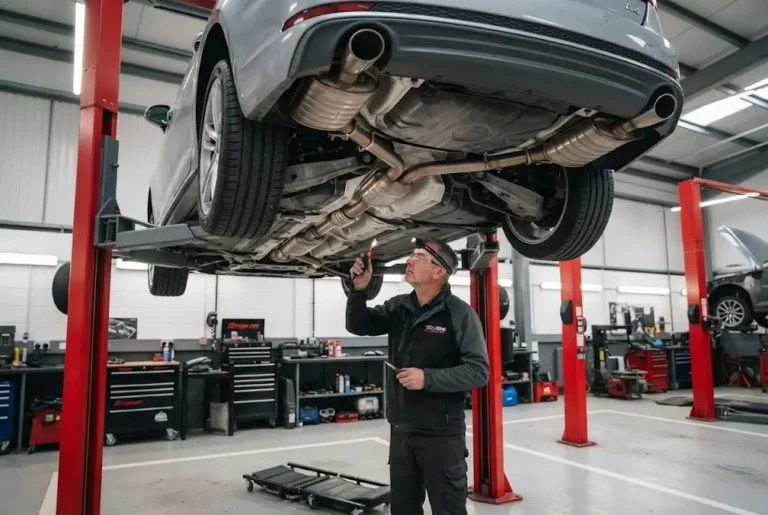
Similarly, an exhaust cluster could connect an article about auto exhaust repair with resources about exhaust replacement, catalytic converters and emissions systems.
Each article remains focused on its own subject while the internal linking structure demonstrates how the topics relate to one another.
Developing an Automotive Keyword Strategy
A strong automotive keyword strategy begins by identifying the questions and problems that matter to the intended audience. Instead of selecting keywords solely because they have search volume, publishers should consider search intent, relevance, topical relationships and the usefulness of the resulting content.
Primary keywords can define the main purpose of individual articles. Secondary keywords can then help establish the semantic context around the topic without forcing unnatural repetition.
For example, an article targeting automotive content marketing can naturally cover content clusters, topical authority, editorial workflow, keyword strategy, internal linking and SEO planning. These related concepts help explain the subject comprehensively without turning the article into a list of disconnected keywords.
Creating an Effective Editorial Workflow
A consistent editorial workflow makes content production easier to manage. Before an article is written, the publisher should establish its primary keyword, search intent, audience, supporting topics, internal links and intended position within the cluster.
The workflow can then move through research, outlining, drafting, optimisation, editing and publishing. A final review should check headings, keyword placement, readability, internal links and metadata before publication.
This process is particularly useful for websites publishing a large number of automotive maintenance articles. Without a defined workflow, similar topics can easily overlap and create unnecessary duplication.
Using Internal Linking Strategically
Internal linking is an important part of a connected automotive content strategy. Links should guide readers toward genuinely relevant information rather than being added simply to increase the number of links on a page.
For example, an article about automotive content marketing can reference specific service topics such as auto air conditioning service, wheel alignment and transmission maintenance when discussing examples of automotive content clusters.
Likewise, individual service articles can link back to broader strategic content where appropriate. This creates a two-way relationship between detailed service resources and broader educational pages.
Descriptive anchor text is useful because it gives readers a clear indication of what they can expect after following a link. The surrounding sentence should also make the connection feel natural.
Creating Content Around Automotive Services
Automotive services provide many opportunities for useful educational content because vehicle owners regularly search for explanations before booking maintenance or repairs.
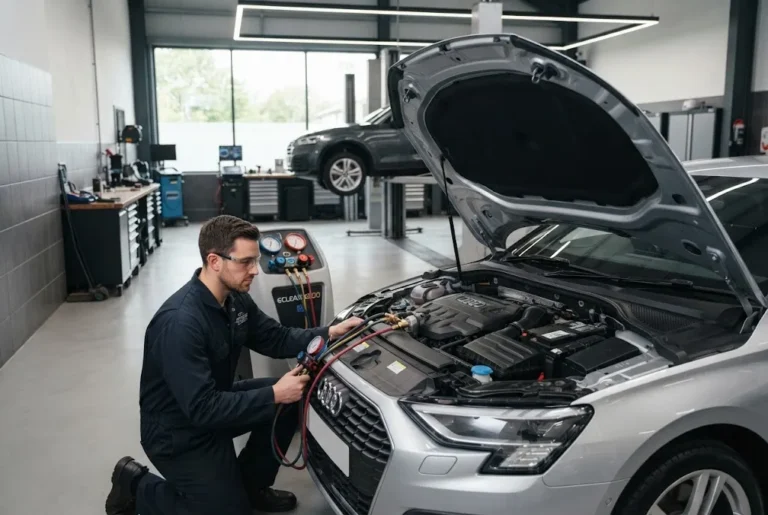
A climate-control cluster, for example, could begin with auto air conditioning service and expand into AC maintenance, refrigerant systems, climate control and common cooling problems.
An exhaust cluster could cover exhaust repair, exhaust replacement and emissions systems. A transmission cluster could address gearbox service, transmission fluid and automatic gearbox maintenance.
These topics have distinct search purposes, which makes it possible to expand coverage without simply rewriting the same article several times.
Balancing Technical Detail With Readability
Automotive subjects can involve technical terminology that ordinary vehicle owners may not immediately understand. Effective content should therefore explain technical concepts in straightforward language.
Technical depth should be appropriate to the audience and search intent. A basic maintenance guide does not need the same level of detail as specialist automotive documentation. At the same time, oversimplifying an important technical subject can make the article less useful.
The most practical approach is to introduce technical terms when they are relevant and explain their purpose in the context of the problem being discussed.
Building an Automotive Publishing System
A publishing system can help an automotive website maintain consistency as its content library grows. Each new article should have a defined category, focus keyword, search intent and relationship to existing content.
Before publishing, editors can review whether the topic already exists elsewhere on the site. If a similar article exists, the new content may need a different angle or a narrower search intent rather than another broad overview.
This process helps reduce keyword cannibalisation while making the site’s architecture easier for both readers and search engines to understand.
Using Maintenance Content to Educate Customers
Educational automotive content can also support customer communication. A service business can use clear guides to explain what a particular maintenance service does, what symptoms may indicate a problem and why professional diagnosis may be necessary.
For example, a customer who notices uneven tyre wear can read about wheel alignment before contacting a workshop. Someone experiencing unusual shifting can learn about transmission service, while a driver experiencing poor cabin cooling can explore air conditioning maintenance.
This educational approach gives customers useful background information without replacing the need for professional inspection when a mechanical problem is suspected.
Planning a Long-Term Automotive SEO Strategy
Long-term SEO planning should focus on building a useful information architecture rather than chasing isolated keywords. Automotive websites have numerous opportunities to expand into related maintenance, repair, ownership and technical subjects.
A practical strategy can begin with a small number of core clusters and gradually expand them as new questions and services become relevant. Existing articles can then be reviewed periodically to identify missing subtopics, outdated information and new internal-linking opportunities.
This creates a publishing system in which every new article has a purpose beyond generating another URL. It contributes to a larger network of related resources.
Measuring Automotive Content Performance
Content performance should be reviewed using meaningful signals rather than relying on publication volume alone. Useful areas to monitor can include organic visibility, relevant search queries, clicks, engagement and the performance of important service pages.
When a cluster performs unevenly, the data can help identify areas that may need additional supporting content or improved internal connections. A page that receives impressions but limited clicks, for example, may require a review of its search presentation and relevance to the query.
The objective is continuous improvement rather than publishing content once and never revisiting it.
How to Avoid Automotive Content Repetition
Repetition is a common problem when websites publish many articles within the same broad automotive category. The solution is to define a distinct purpose for every page before writing it.
An article about exhaust repair should focus on diagnosing and addressing exhaust faults. An article about exhaust replacement can concentrate on when replacement may be appropriate and how the process differs from a repair. Similarly, an article about transmission fluid should not simply repeat a general transmission-service guide.
Clear boundaries between related topics make the entire cluster more useful and help each article develop its own search intent.
Final Thoughts on Automotive Content Marketing
Automotive content marketing works best when individual articles form part of a coherent publishing system. Content clusters, focused keyword strategies, contextual internal links and a consistent editorial workflow can help an automotive website develop deeper subject coverage without producing repetitive pages.
Service topics such as wheel alignment, exhaust repair, air conditioning and transmission maintenance provide natural foundations for connected educational resources. Each subject can be developed independently while contributing to the wider automotive knowledge base.
By planning content around real search intent and meaningful relationships between topics, publishers can create an automotive website that is easier to navigate, more useful to readers and structured for long-term SEO growth.