Learning how to write property descriptions is one of the highest-value skills in estate agency, because the description is where a browsing stranger becomes a viewing booking. Portals give every listing the same layout, the same photo grid and the same floorplan box. The words are the only place one home can sound genuinely different from the identical three-bed semi two streets away. Yet most descriptions are written as an afterthought: a list of rooms, a handful of tired adjectives and a postcode.
This guide covers the method professional copywriters use: lead with the life the home offers, prove every claim with a specific detail, and structure the text so a busy reader absorbs the selling points in the order that builds desire. None of it requires literary talent. It requires honesty, observation and the discipline to cut anything that could describe any house in Britain.
Start With the Buyer, Not the Building
Before you write a word, decide who the home is for. A two-bed flat near a station is a first rung for a commuter; the same flat described generically speaks to nobody. Family homes sell on space, schools and gardens. Retirement flats sell on ease, warmth and low maintenance. When you know how to write property descriptions for a specific reader, half the work is done, because every sentence can be tested against one question: does this matter to them?
Walk the property with that buyer in mind and note what they would notice. Not the number of radiators, but the morning light in the kitchen, the quiet at the back of the house, the shed that swallows bikes and tools. Specific observations are the raw material of persuasive copy, and they cannot be invented at a desk afterwards. If you are preparing the whole marketing pack, the same audience-first thinking shapes everything else; our step-by-step guide to How to Write a Content Brief: A Step-by-Step Guide for Better Articles shows how a clear brief keeps writers and photographers pulling in the same direction.
Open With the Life, Not the Lobby
The first two lines decide whether the reader continues. Openings that begin “We are delighted to offer” waste them on the agent, and room-by-room inventories waste them on information the photos already show. Open instead with the strongest truth about the home: the view, the garden, the period character, the rare combination of space and location.
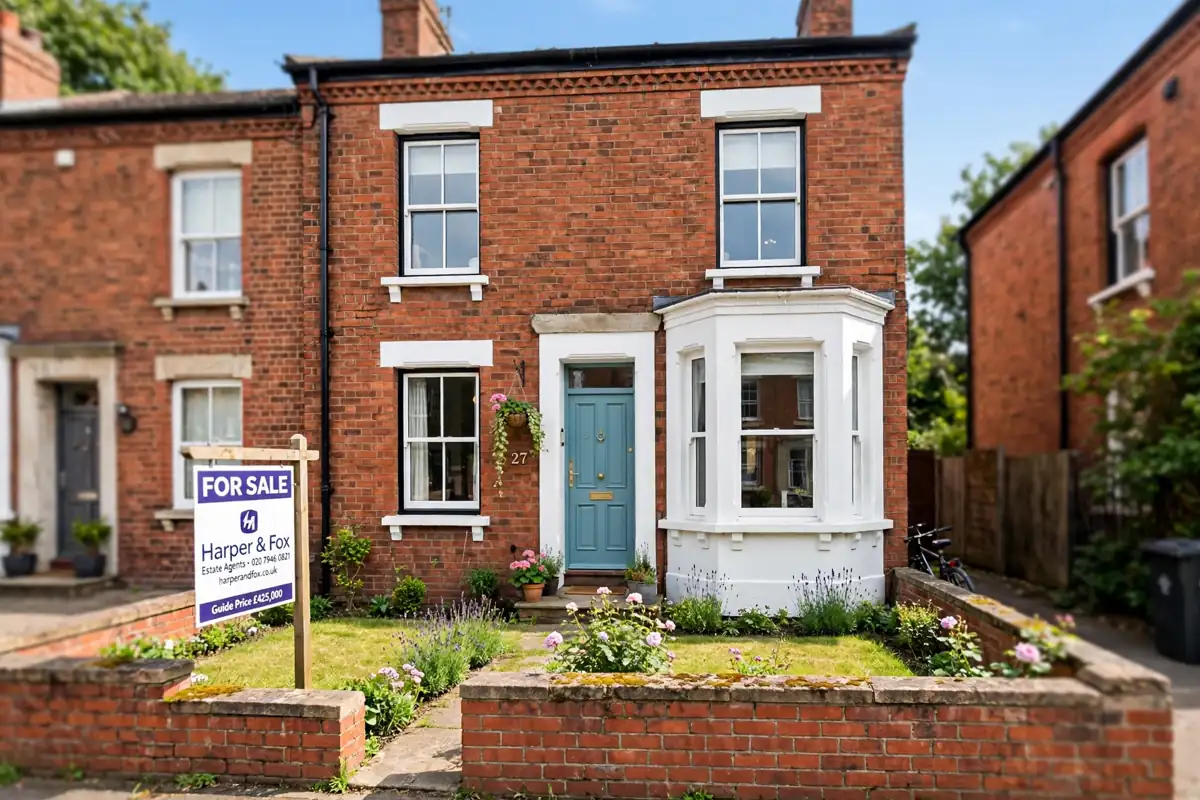
Compare “A three-bedroom semi-detached house with lounge, kitchen and bathroom” with “A bay-fronted semi on a quiet tree-lined street, ten minutes’ walk from the station, with a south-facing garden that catches the sun until evening.” The second version contains facts, but arranged as a life someone can imagine living. That is the core of how to write property descriptions that sell: facts selected and ordered for effect, never decoration pasted over a feature list.
Replace Adjectives With Evidence
“Stunning”, “immaculate” and “spacious” are the most overused words in property marketing, and readers have learned to discount all three. The fix is not a thesaurus; it is evidence. Spacious becomes “a 6.2-metre living room that seats eight around a table”. Immaculate becomes “refitted kitchen (2023) with quartz worktops and integrated appliances”. A “sought-after location” becomes “in the catchment for two Ofsted Outstanding primaries”.
This discipline, replacing claims with proof, is the same skill that makes product copy convert in any category. Our practical guide to Beauty Product Descriptions That Sell: A Practical Writing Guide makes the identical point for retail products: buyers believe specifics and ignore superlatives. Property is no different, except the purchase is bigger and the scepticism deeper. Every adjective you keep should have to justify itself against a fact you could have used instead.
Structure the Description So It Sells in Order
Readers skim, so structure does the persuading. A reliable order is: the hook opening, the main living spaces described as experiences, the practical strengths (storage, parking, heating, connectivity), the outside space, then location benefits with real distances and times. Put the strongest material first and the logistics last; a reader who reaches the EPC rating has already decided to care.
Write in short paragraphs with the key features easy to scan, and keep sentences active: “the garden backs onto fields” beats “fields can be found at the rear”. Avoid estate-agent code that readers translate cynically. “Cosy” means small, “bijou” means smaller, and “in need of modernisation” should be stated plainly with the positives that make the work worthwhile, such as the plot size or the ceiling height. Honesty builds the trust that gets viewings booked, and it protects the sale later when a surveyor confirms what you said.
Handle the Weak Points Like a Professional
Every home has a compromise: a small third bedroom, a busy road, a north-facing garden. Beginners hide them; professionals frame them truthfully. The small bedroom is a nursery, a study or a dressing room in a world of hybrid working. The road brings a bus route and a parade of shops. The north-facing garden is cool in a heatwave and private because nothing overlooks it.
Framing is not spinning. Never claim what is not true, never omit a material fact the law expects you to share, and remember that consumer protection rules apply to property marketing as much as to any advertising. The goal is simply to present each feature through the eyes of the buyer most likely to value it, which is the same audience-first principle you started with.
Close With a Next Step, Not a Full Stop
Most descriptions dribble out on a room list. A selling description closes by returning to the opening promise and asking for the viewing: “Homes on this street rarely come up, and the garden has to be seen to be believed. Book a viewing this week.” A specific, confident close converts the goodwill the description has built. If the property has a deadline, a chain-free seller or an open day, say so; urgency that is true is a service to the reader.
The same principle powers good content marketing generally: our guide to Automotive Content Marketing: Build a Strong SEO Strategy explains how a clear call to action turns readers into enquiries across a whole website, and a property listing is simply that lesson in miniature. Write the description, read it aloud, cut every sentence that could describe another house, and what remains will sound like the only home your buyer needs to see.
A Quick Checklist Before Any Description Goes Live
Before a listing is published, run the description against five checks. Does the first line mention the strongest feature rather than the agency? Could every adjective be replaced by a fact, and have the easy ones been replaced already? Are the measurements, distances and dates accurate enough to survive a viewing? Does the text mention the buyer it is written for, in their language rather than the seller’s? And does it end by asking for the viewing clearly? A description that passes all five will outperform longer, louder copy every time, because readers reward the feeling that someone has told them the truth efficiently. That feeling, repeated across every listing an agency publishes, becomes the brand.