A reliable battery is essential for starting a vehicle and supporting many of its electrical systems. Professional auto battery service can help determine whether a battery needs charging, maintenance or replacement, while also checking for related problems that could cause repeated starting difficulties. Understanding how battery testing works can help drivers recognise warning signs and avoid replacing a battery when another part of the vehicle may be responsible.
Battery problems can appear in several ways. A car may crank slowly, require frequent jump-starts or fail to start after being parked. In other cases, the battery may appear to be the problem when the real cause is a charging fault, poor connection or an electrical drain. A proper assessment therefore looks at the battery and the wider starting and charging system.
What Does Auto Battery Service Include?
The exact scope varies between garages, but professional auto battery service can include several checks and maintenance tasks:
- Visual inspection of the battery
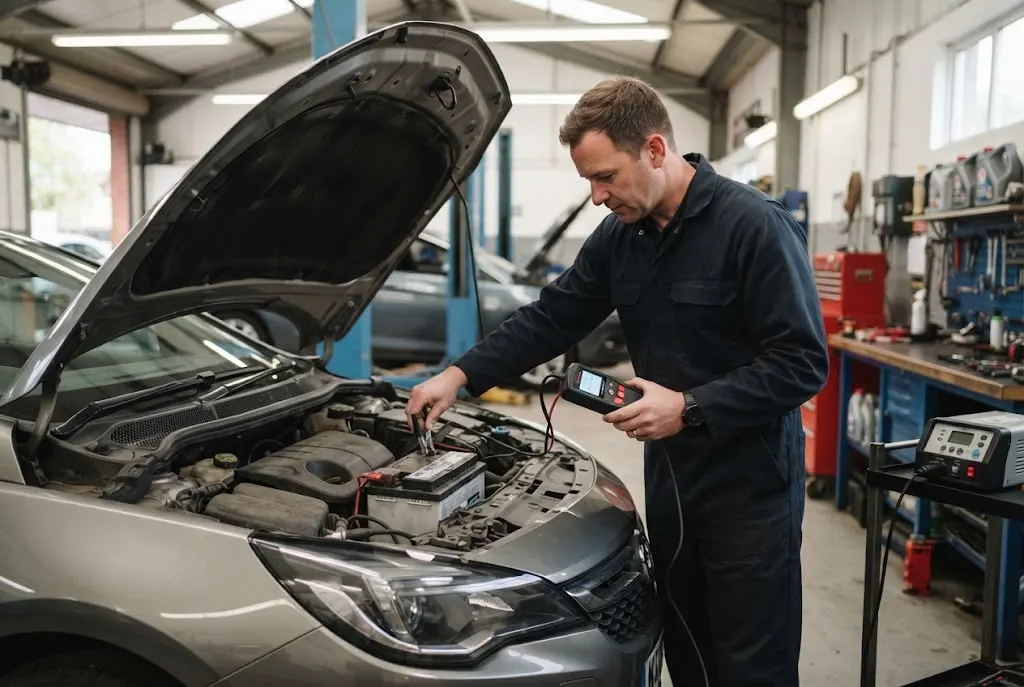
- Battery voltage testing
- Assessment of starting performance
- Inspection of battery terminals and connections
- Battery charging where appropriate
- Charging-system checks
- Battery replacement
- Investigation of repeated battery discharge
- Inspection of relevant cables and connections
A technician may also consider the vehicle’s age, usage pattern and reported symptoms. This matters because battery performance can be affected by operating conditions, while repeated discharge may point towards a separate fault.
When Does a Car Battery Need Testing?
Battery testing can be useful whenever a vehicle shows signs of starting or electrical problems. It can also be worthwhile when a battery has repeatedly gone flat or when a vehicle is being prepared for extended periods of use.
Common signs that may justify a battery check include:
- Slow or hesitant engine cranking
- Clicking when attempting to start the vehicle
- Repeated need for a jump-start
- Electrical equipment becoming unusually weak
- A battery that repeatedly loses charge
- Difficulty starting after the vehicle has been parked
- Visible damage or deterioration around the battery
These symptoms do not automatically prove that the battery has failed. For example, slow starting can also be associated with poor connections or a problem within the starting system. Testing helps narrow down the possible causes.
How Battery Charging Works
Battery charging can restore available charge when a battery has become discharged, but charging is not always a permanent solution. If the battery has deteriorated internally, repeatedly charging it may not restore dependable starting performance.
Before charging, the battery and vehicle should be assessed appropriately. The correct charging procedure depends on the battery type and vehicle requirements. Drivers should follow the manufacturer’s guidance and use suitable equipment rather than treating every vehicle battery in exactly the same way.
If a battery repeatedly becomes discharged, the reason should also be investigated. A healthy charging system should normally replenish the battery while the vehicle is operating. An electrical drain can also cause a battery to lose charge while the vehicle is parked.
Auto Battery Service and Battery Replacement
Battery replacement may be necessary when a battery can no longer provide reliable starting performance or has reached the end of its useful service life. However, selecting a replacement is not simply a matter of choosing the cheapest battery available.
The replacement should be appropriate for the vehicle and its electrical requirements. Factors such as battery specification, physical dimensions, terminal arrangement and the vehicle’s electrical system can matter. Some modern vehicles may also require additional procedures after battery replacement, depending on their design.
A professional installation can therefore include checking the replacement specification and ensuring that the battery is correctly secured and connected.
Why Battery Maintenance Matters
Battery maintenance can help drivers identify potential problems before they result in an unexpected breakdown. Routine attention is particularly useful for vehicles that are used infrequently or mainly for short journeys.
Drivers should follow the manufacturer’s maintenance recommendations and pay attention to changes in starting performance. Battery terminals and connections should also remain secure and appropriately maintained.
Keeping the vehicle in good overall condition matters as well. A battery does not operate independently of the rest of the electrical system. Problems elsewhere can place additional demands on it or prevent it from being properly recharged.
Battery Diagnostics Can Reveal More Than a Flat Battery
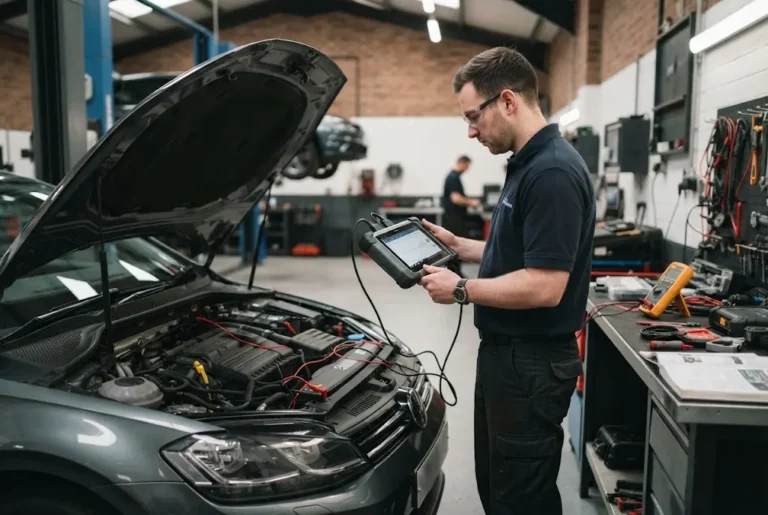
When a vehicle repeatedly develops a flat battery, replacing it immediately may only treat the symptom. A more complete assessment can examine the battery, charging system and possible electrical consumption while the vehicle is switched off.
This is where battery diagnostics can complement wider auto electrical services. Electrical specialists can investigate charging faults, wiring problems and unwanted electrical drains when the battery itself is not the underlying cause.
Similarly, a wider vehicle inspection can identify related mechanical or electrical issues that may affect the vehicle’s overall reliability.
Understanding the Battery and Alternator Relationship
The battery and alternator have different but connected roles. The battery provides electrical energy needed for starting and supports vehicle electrical equipment under appropriate conditions. The alternator generates electrical power while the engine is running and helps maintain the battery’s charge.
This relationship explains why a new battery may not solve a recurring problem. If the charging system is not functioning correctly, the replacement battery can eventually become discharged as well.
Warning signs such as repeated battery discharge, charging-system warnings or unusual electrical behaviour should therefore be investigated rather than automatically attributed to battery age.
What Causes a Battery to Go Flat?
A battery can become discharged for several reasons. Leaving lights or other electrical equipment operating while the engine is off is a familiar example. However, repeated discharge can have more complicated causes.
Possible factors include:
- An ageing or deteriorated battery
- Insufficient charging from the vehicle’s charging system
- Extended periods without driving
- Frequent short journeys
- Electrical equipment being left active
- An abnormal electrical drain
- Poor battery or electrical connections
Identifying the cause is important because each situation requires a different response. Charging may be appropriate in one case, while another may require battery replacement or electrical troubleshooting.
Jump-Start Guides: What Drivers Should Know
Jump-start guides can be useful when a vehicle has a discharged battery, but drivers should always follow the vehicle manufacturer’s instructions. Modern vehicles can have specific requirements for jump-starting, and incorrect connections can damage electrical components or create safety risks.
A jump-start is also a way to get a vehicle running; it does not necessarily repair the reason the battery became discharged. If the same problem happens repeatedly, professional testing is appropriate.
Drivers should also consider whether the vehicle is safe to operate after starting. A battery problem may coexist with a charging-system fault, warning light or another issue that requires attention.
Auto Battery Service Before Winter
Seasonal changes can make existing battery weaknesses more noticeable. Cold conditions can make starting more demanding, so a battery that is already struggling may show symptoms more clearly during winter.
Before periods of colder weather, drivers can check the battery’s condition, monitor starting performance and make sure routine vehicle maintenance is up to date. This does not guarantee that a battery will remain trouble-free, but it can provide an opportunity to identify obvious concerns.
For vehicles that are parked for long periods, owners should also follow manufacturer guidance regarding battery maintenance and storage.
When Professional Battery Service Makes Sense
Professional assistance is particularly useful when a battery repeatedly loses charge, the vehicle has starting problems that cannot be explained, or electrical warning lights appear. A technician can assess the battery alongside the relevant starting and charging components.
A clear service report should distinguish between what was tested, what was observed and what further work is recommended. This makes it easier for vehicle owners to understand whether they need a replacement battery, additional diagnostic testing or another repair.
Building Useful Battery Maintenance Content
For automotive publishers, battery maintenance is an evergreen subject because drivers regularly search for practical explanations of starting problems, charging issues and replacement decisions. High-quality maintenance articles can answer specific questions without repeating the same information across multiple pages.
Battery content can also connect naturally with related subjects such as auto electrical troubleshooting, vehicle inspections and warning-light explanations. This creates a stronger educational resource while helping readers move from a general symptom to a more relevant technical article.
For example, readers investigating repeated battery discharge may benefit from content about electrical faults, while someone preparing for a broader vehicle assessment may find auto inspection services more relevant.
Keeping Your Vehicle Battery Reliable
A vehicle battery should not be treated as an isolated component. Reliable starting performance depends on the condition of the battery, electrical connections, starter system and charging system working together appropriately.
Regular maintenance, attention to warning signs and appropriate testing can help identify problems before they become inconvenient. When a battery repeatedly fails to hold charge or starting performance changes, professional assessment can establish whether charging, replacement or further diagnosis is required.
Ultimately, good auto battery service is about more than fitting a new battery. It is about understanding the vehicle’s electrical needs, identifying the reason for the problem and ensuring the solution addresses the underlying issue wherever possible.